
Bingham Parole and Probation
Parole and probation both permit life in the community under rules, but they begin under different legal authority. A Bingham County probationer remains under the court's jurisdiction. A parolee remains under the Idaho Commission of Pardons and Parole after leaving prison. Idaho Department of Correction Probation & Parole performs field supervision for both felony groups. An IDOC community status therefore means the person is outside prison under conditions. It does not mean the sentence has ended.
Idaho felony sentences may include a fixed prison term followed by an indeterminate term. The Commission may grant parole during that later part, after which an IDOC officer supervises the parolee. A judge may instead suspend a felony prison sentence and order probation. County probation is a separate local service and must not be treated as the felony parole office.
| Point | Parole | Probation |
|---|---|---|
| Legal authority | Commission of Pardons and Parole | Sentencing court |
| How it starts | Release from prison during the indeterminate term | Court order, sometimes with a suspended prison sentence |
| Field supervision | IDOC Probation & Parole | IDOC for felony probation; county office for its local caseload |
| Best public check | IDOC status, Commission action, and court record | IDOC status and court probation orders |
- Parole
- Conditional community release from prison while the sentence remains active.
- Probation
- Court-ordered community supervision, which may occur without a state-prison release.
- Discharge
- The formal end of custody or supervision, not merely release from a building.
- Absconder
- A supervised person alleged to have left supervision without permission.
Verify Bingham Post-Release Supervision
The official first route is the IDOC Resident/Client Search. It covers incarcerated residents, probationers, and parolees under IDOC jurisdiction. Search by last name and optional first name, or use an IDOC number. A partial last name needs at least two characters, while a partial IDOC number needs at least three digits. Compare the identity and sentencing county before drawing a conclusion.
- Search the exact name or known IDOC number and open the matching detail record.
- Record the overall Status, Released to Supervision date, Sentence Satisfaction Date, and case number.
- Check iCourt for the probation order, later modification, revocation, or discharge in the same case.
- Contact District 7 with the IDOC number when the status is unclear, and ask which public channel can confirm active supervision.
Released to Supervision is the most recent placement on supervision by a court or the Commission. It is not an unconditional discharge date. Sentence Satisfaction Date marks the sentence endpoint reflected by IDOC, not the date the person left prison. The database updates daily, so a same-day change may not appear at once.
Note: A future satisfaction date does not reveal compliance and should not replace confirmation from the proper supervision office.
Bingham Felony Supervision Offices
Bingham County belongs to IDOC Probation & Parole District 7, which follows Idaho's Seventh Judicial District. IDOC publishes both a district office in Idaho Falls and a satellite office in Blackfoot. The public page does not provide a general lookup for a named supervising officer. Staff can route an inquiry or help interpret a public status, but protected case-management facts may not be disclosed.
Blackfoot Satellite Office
370 N Meridian
Blackfoot, ID 83221
Phone: 208-785-2883
Fax: 208-785-2915
District 7 Office
2225 W Broadway Street, Suite A
Idaho Falls, ID 83402
Phone: 208-528-4220
The official District 7 screenshot shows the Bingham-local route. View the source office page before using its contact details.
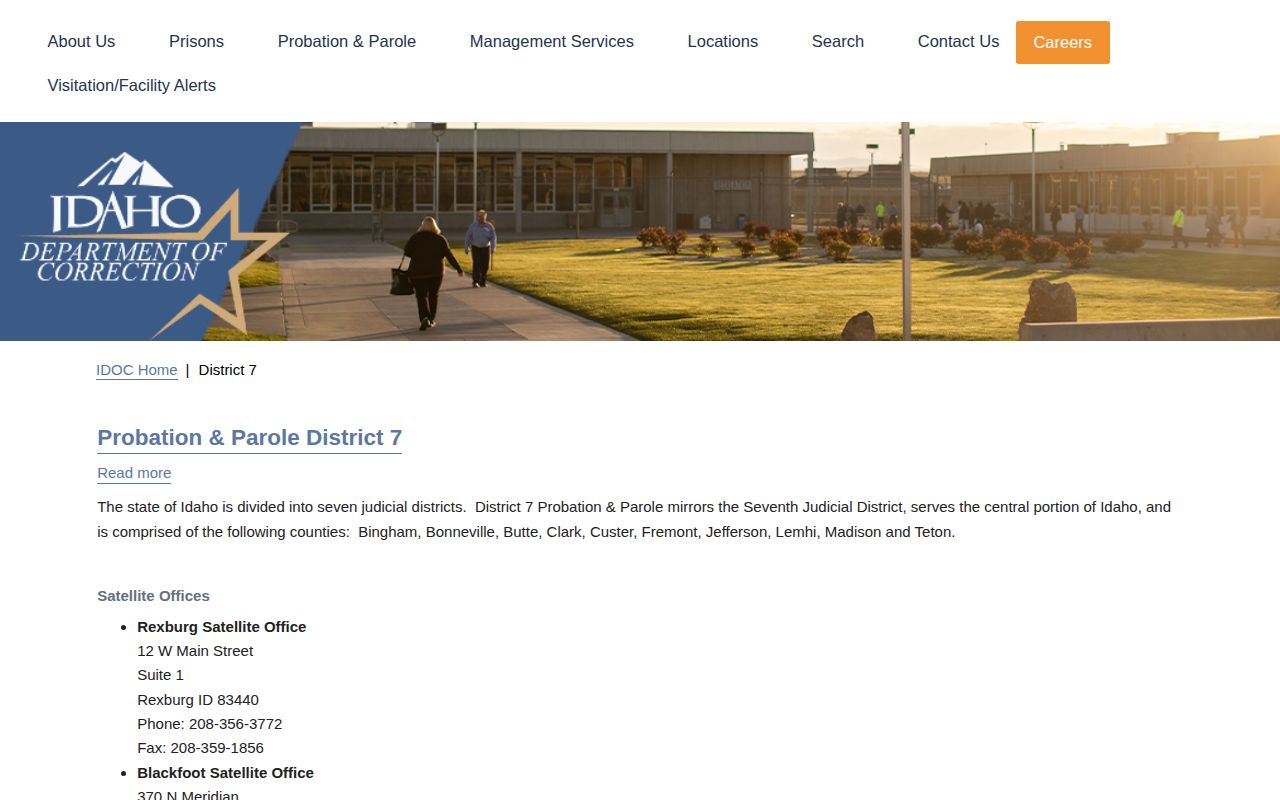
The Blackfoot listing helps keep a Bingham County felony-supervision inquiry with the state office rather than the county probation desk.
Bingham Parole Warrant Checks
IDOC's Fugitive Recovery page is a selected Most Wanted list. It is not a full roster of all alleged absconders. An entry may show a photograph, IDOC number, wanted-since information, warrant reason, physical description, and whether the person is at large or captured. If a name is absent, IDOC directs users back to Resident/Client Search rather than treating the missing listing as proof that no warrant exists.
Idaho Code § 20-1007 says a written Commission warrant suspends parole. From issue until arrest, the parolee is treated as a fugitive from justice. Thus, an older parole release can be real even when a later warrant changes the person's status. Do not approach a listed person. The official reporting number is 208-658-2167; anonymous options are 208-343-COPS and 800-222-TIPS.
The official layout also warns users to try the full resident search when a person is not shown. Review the IDOC source beside the captured page.
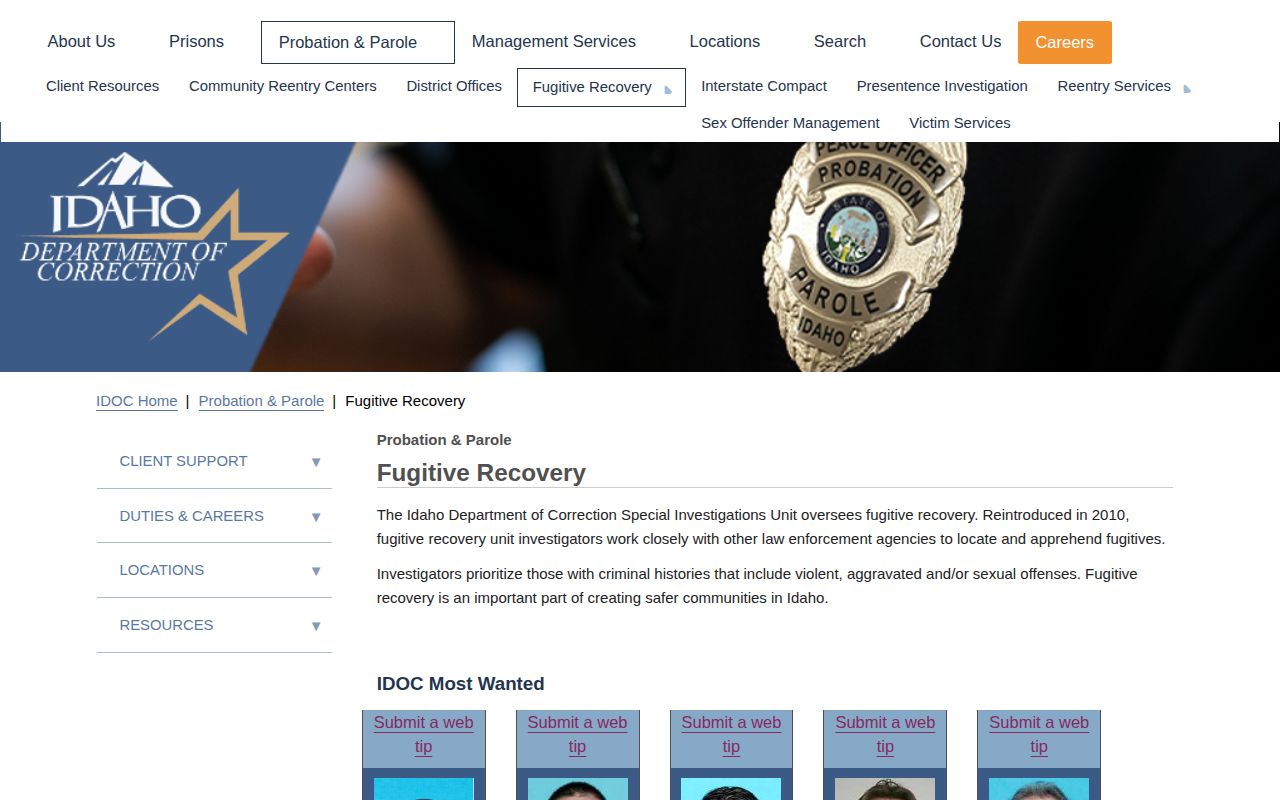
This distinction prevents a selected public list from being mistaken for a complete supervision database.
Bingham Supervision Discharge Records
Supervision ends through a formal legal event. For probation, the court record may contain a discharge order, completion entry, revocation, or other later action. For parole, IDOC and Commission records document the path through supervision and sentence satisfaction. A jail release alone does not prove either form of supervision ended. Nor does a person disappearing from a public jail roster answer whether a felony sentence remains active.
When exact dates matter, request the existing record from the office that holds it. IDOC's Records Information portal can address state correctional records, while the Commission maintains parole actions and the court clerk holds probation orders. A narrow request should identify the person, IDOC number, sentencing county, case number, and date range. Ask for the public portions showing release to supervision, discharge, or satisfaction.
A full custody search also needs the routes on the Bingham County released inmates home page. Those records distinguish release from the county jail, transfer to state custody, and later state supervision.
Bingham County Probation Limits
The Bingham County Probation office expressly states that it does not supervise felony probation or parole. Its local office at 50 Lavon Street directs felony matters to the Blackfoot state satellite office. County Probation lists 208-782-2680 and 208-782-3188, with hours Monday through Thursday from 8 a.m. to noon and 1 to 5 p.m. It is closed Friday. That schedule and boundary make the court and supervision type important before a call.
Start with the judgment or IDOC record. A misdemeanor or other local supervision matter may belong with County Probation. A felony parole or probation status belongs with IDOC District 7. The official Bingham County Probation page states the difference and supplies the state referral number.
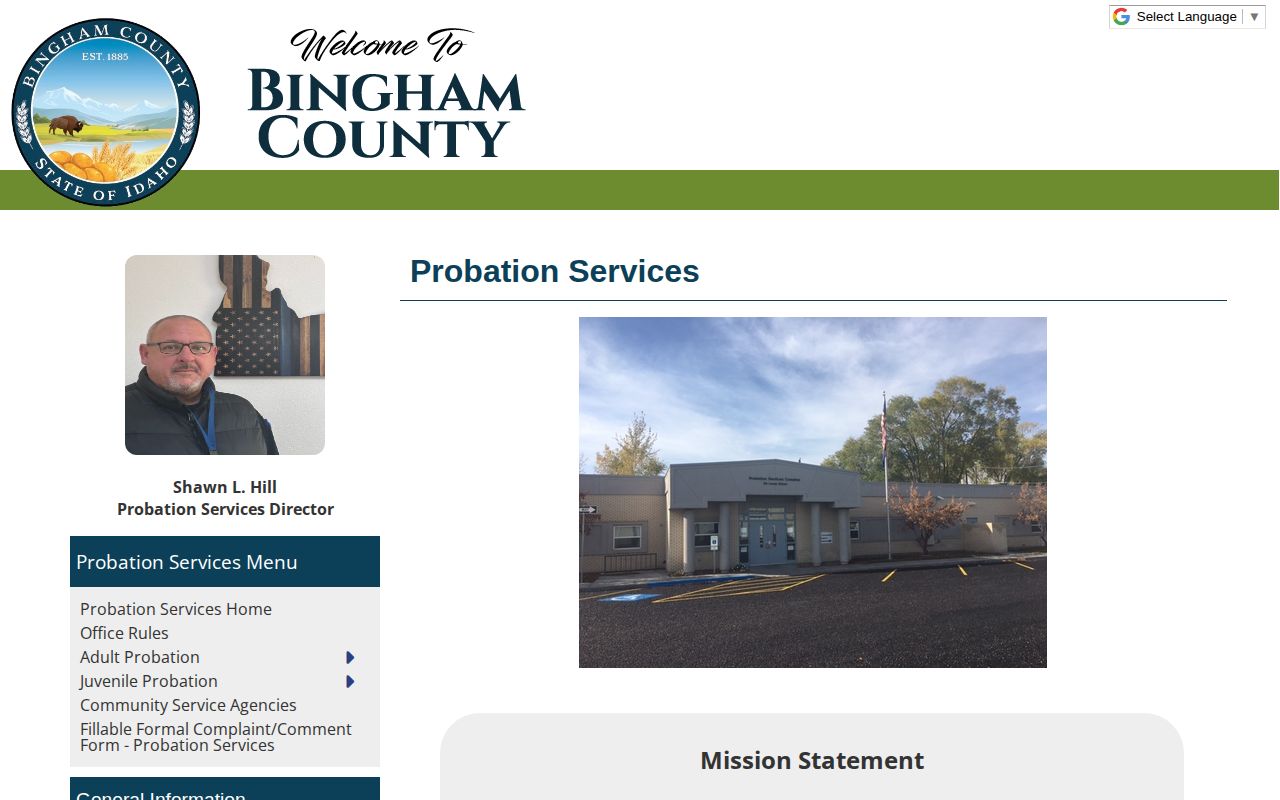
The captured notice is a direct guard against sending a felony-supervision question to the wrong local office.
Bingham Supervision Status Changes
One public label rarely tells the whole story. A probation order can be modified, discharged, or revoked by the court. Parole can be suspended by a Commission warrant and may later resume or end. IDOC may show the person's current state status, but the case docket and Commission action explain the legal step behind it. A person can also leave the Bingham County Jail through a transfer rather than a community release, so a missing jail name is not proof of probation or parole.
VINE serves a different role. Idaho VINE can send a custody-change alert when a jail or IDOC reports a release or transfer. The event is timely notice, not a durable supervision record. It does not state that every release was to the community, nor does it prove the full sentence ended. Pair a VINE notice with the IDOC detail and the court or Commission record before describing the result.
Conditions are person-specific and come from the lawful order and supervision plan. Public records can confirm the broad status, but they may not expose protected case-management details or name the assigned officer. Ask the office which existing public record can resolve the question. Do not ask staff to speculate about conduct or future action.
Idaho's public-record framework also favors a focused request. Ask IDOC for existing public fields showing status, release to supervision, sentence satisfaction, and the linked case, rather than a complete correctional file. IDOC identifies medical, treatment, victim, informant, security, and several investigative materials as records that may be exempt. A narrow request helps the agency separate releasable facts from protected material and gives a clearer answer to the supervision question.
When the public entry and court docket disagree, note what each source measures and the date of its update. The supervision office can then direct the inquiry to the record that controls the disputed point.
Note: Use the agency tied to the status, because the jail, court, IDOC, and Commission each document a different event.